

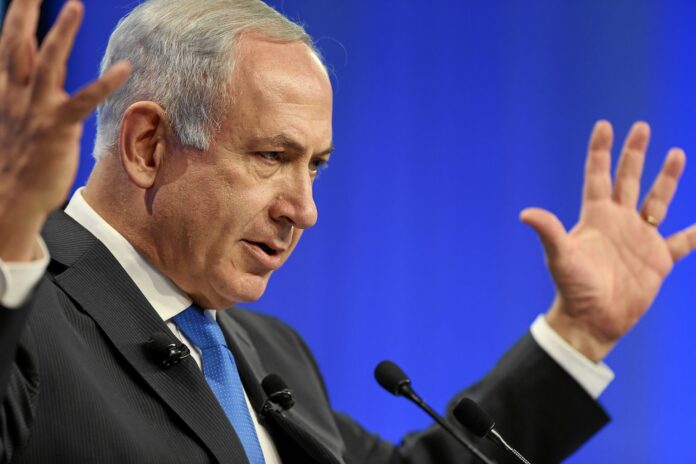
Israel’s first elections since the October 7, 2023 massacre and the three-year genocidal war that followed took place on October 27. The final results reflected a determined effort by working people to remove the deeply unpopular far-right government led by Benjamin Netanyahu. However, neither of the rival blocs contesting these elections offered any way out of the living nightmare being faced by the Palestinian people including the continuous wars and occupation, in an election campaign dominated by nationalist reaction.
Voter turnout reached its highest level since 1999, the year Netanyahu suffered his first electoral defeat. The surge in participation reduced the far-right bloc from a 68-seat majority to just 53 seats. Falling well short of the 61 seats required for a governing majority, Netanyahu currently has no clear path to forming a government.
The scale of voter participation is particularly noteworthy given the severe flooding that affected parts of southern Israel on election day. Turnout was also driven by an unusually large number of “double-envelope” votes (special absentee ballots by mail) cast by soldiers, prisoners, evacuees, and hospitalized voters, amounting to roughly 12% of all ballots. In addition, an estimated 60,000 Israelis living abroad traveled to the country specifically to vote. These historically high levels of participation fueled expectations that the opposition could secure the majority needed to form what it called a “government of change.” The mood was reinforced by several days of anti-Netanyahu demonstrations in the run-up to the election.
Exit polls showing a narrow opposition advantage immediately sparked celebrations in Tel Aviv and other cities. Those hopes quickly gave way to disappointment once the final count was completed. The results ultimately showed the opposition camp, led by former military chief of staff Gadi Eisenkot’s newly formed right-wing Yashar Party, winning only 48 seats, just two more than the opposition secured in the 2022 election.
The most significant anti-Netanyahu mobilization came from Palestinian citizens of Israel, who make up roughly one-fifth of the country’s population. Driven by a determination to defeat the most racist and reactionary government in Israeli history, Palestinian voters backed the Joint List, a coalition consisting of the Communist Party-led Hadash, the Arab Movement for Renewal (Ta’al), and the secular left-nationalist Democratic National Alliance (Balad). Most of the remaining Palestinian vote went to the Islamist conservative United Arab List (Ra’am).
Together, these parties won 19 seats, the strongest result ever achieved by Palestinian-led parties in Israeli elections. As a result, barring new elections, the next Knesset (Israeli parliament) is expected to contain the largest number of Palestinian representatives in its history.
In a Trumpian fashion, Netanyahu alleged widespread electoral fraud in Arab-Palestinian towns and villages without presenting evidence. His accusations followed earlier attempts to undermine the electoral process. In the weeks leading up to the vote, Netanyahu and his allies sought to postpone the elections and pursued efforts to disqualify Palestinian candidates and parties.
At the same time, Netanyahu pushed for a new military escalation against Iran. Reports indicate that these efforts were opposed not only by sections of Israel’s military leadership but also by the Trump administration who were staring down their own set of elections. Similarly, the intensification of Israeli military operations and settler violence in the West Bank appeared aimed at provoking an escalation that could be used to justify delaying the elections and rallying support around a “national unity” agenda.
Netanyahu’s panic stems from warning signs for the right wing. Turnout among Palestinian citizens of Israel reached unprecedented levels. In Sakhnin, voter participation reached 87%, the highest rate recorded in any city in the country. The city has been the site of major protests against government neglect, discrimination, racism, and the ongoing crisis of organized crime affecting Palestinian communities. Compared with 2022, turnout increased by 19% in Sakhnin, while other Palestinian localities recorded even larger gains, including 32% in Baqa al-Gharbiyye and 37% in Fureidis.
Netanyahu’s coalition—having survived from 2022 to 2026 despite repeated splits, political crises, and mass public opposition—is hoping for another comeback. It became the first Israeli government since 1988 to complete a full four-year term and only the second in the country’s history to do so under the leadership of the same prime minister, the first being Golda Meir’s government in 1969.
Opposition Bloc Offers No Real Alternative
The opposition parties were united not by a program for the masses of working people but primarily by their opposition to Netanyahu. The coalition is dominated by competing shades of the political right, offering only tactical adjustments to the existing billionaires’ rule.
The central promises of a prospective “government of change” led by Eisenkot focused on establishing a state investigation into the October 7 disaster, passing legislation that would prevent an indicted politician from forming a government, and reversing Netanyahu’s judicial reforms and other anti-democratic measures.
These parties represent a section of the Israeli ruling capitalist class that has become increasingly dissatisfied with the government’s direction. In particular, they are worried about Israel’s growing international isolation, declining support among Jewish communities in Western countries, the expansion of the global protest movement, the threat of sanctions, and the political instability generated by years of military escalation across the region.
Yet this opposition offers no fundamental alternative. The leaders of the opposition such as Eisenkot joined Netanyahu’s government for nine months after October 7 and fully supported the wars on Iran and Lebanon. Questions of Palestinian rights, self-determination, or ending the war were largely absent from the election campaign. When attacked by Netanyahu, Eisenkot declared he has never been in favor of a Palestinian state.
The personalized nature of anti-Netanyahu politics was on full display during election-night speeches. In his first public statement after the results, opposition leader Avigdor Lieberman called on members of Likud to rebel against Netanyahu, arguing that doing so would reunify the so-called “national camp.”
At the same time, several leading opposition figures repeated racist pledges that they would not rely on “the Arabs”—meaning the Communist and Palestinian parties—to form a government. Ironically, the election results have now forced sections of the opposition to debate precisely that possibility. Shortly after the vote, Yair Golan of the Democrats called on his allies to open discussions with both the Joint List and Ra’am regarding potential cooperation.
Prospects For A New Government
The electoral deadlock leaves a handful of plausible outcomes, none of which provide Netanyahu with a straightforward route back to power.
Recognizing this reality, Netanyahu reportedly explored the possibility of a “national unity” government that could rotate the premiership between himself and Eisenkot. Such a proposal is very unlikely. Opposition to Netanyahu remains the central force holding the opposition camp together, making cooperation with him political suicide.
A more likely scenario would see the formation of a highly unstable super-minority government dependent on support from the Joint List and Ra’am, either through voting in favor or by abstaining and thereby giving the opposition majority. This would represent a sharp reversal for politicians who repeatedly promised not to rely on Palestinian parties. The only other plausible alternatives are a split within Likud that delivers support to the opposition or yet another election.
Within hours of the results being announced, both the Joint List and Ra’am signaled a willingness to cooperate with opposition parties in order to remove the current government.
Joint List leader Yousef Jabareen explained that defeating the Netanyahu coalition remained his party’s immediate priority. Speaking to the newspaper Yediot Aharonot, he put the responsibility for the growth of criminal gang violence in Palestinian communities on far-right ministers such as Itamar Ben-Gvir and said that removing the current government is necessary to change that reality. He added that “we need a policy change and a government without racists.”
Similarly, Ahmad Tibi of Ta’al indicated that the Joint List could support an alternative government from outside the coalition if it committed to providing resources to combat crime in Arab-Palestinian communities and ended the demolition of homes in Bedouin areas.
Of course, the record of the far-right government extends far beyond its failure to address crime. Its legacy includes systematic incitement, discrimination, racist violence, house demolitions, austerity measures, and intensified repression. The treatment of Palestinian citizens of Israel cannot be separated from the ongoing expansion of settlements, land seizures, military violence in the West Bank, or the genocidal offensive in Gaza.
Even if the Joint List and Ra’am choose to pursue tactical cooperation with opposition forces, the notion that a replacement government would be free of racist politicians is illusory. Regardless of parliamentary maneuvers, any meaningful way forward requires the organization of a mass struggle against the broader racist capitalist system that produced the current crisis.
Build The Struggle Against Billionaire Rule
The coming weeks will produce either a new government, the continuation of the current deadlock, or another election campaign. Whatever the immediate outcome, the results demonstrate the depth of popular anger toward Netanyahu’s government and everything it represents.
No confidence should be placed in the parties of the so-called “bloc of change.” The election exposed both the weakness of the far-right and the inability of the capitalist opposition to provide a genuine alternative.
What is urgently needed is a renewal of mass struggle in workplaces and on the streets. The international solidarity movement with the Palestinian liberation struggle must continue to expand, as demonstrated by the dockworkers’ strike on October 30.
A genuine alternative must be rooted in cross-national working-class solidarity. It must bring together Jewish and Palestinian workers in a struggle for socialist change against racism, oppression, exploitation, austerity, and war, while taking on the capitalist system that produces them. Only such a movement can offer an alternative to the crisis of capitalism in the Middle East and internationally.