

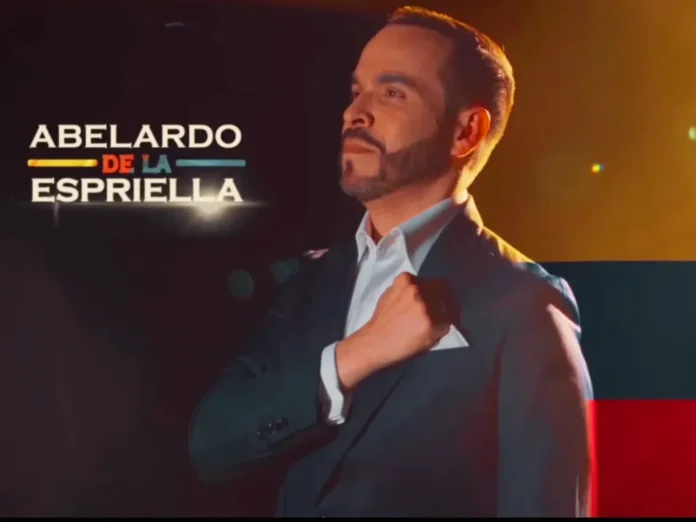
The results of the first round of Colombia’s presidential election on Sunday May 31 raise alarm bells about the possible victory for far-right candidate Abelardo de la Espriella. Espriella, who calls himself “El Tigre” (the tiger), presents himself as a “Colombian Bukele” (in reference to the president of El Salvador) and promises to liberalize gun laws, build mega-prisons, cut public spending, and allow further oil exploration.
Espriella won 43.7% of the vote, compared to 40.9% for Iván Cepeda, the candidate backed by the current left-wing president, Gustavo Petro, and the “Pacto Historico,” a broad left-wing coalition. The two will compete in a runoff election on June 21.
Today, all forces must be mobilized to block the far right, but also to prepare workers for resistance and struggle. Regardless of the outcome, Colombia is heading toward a new period of turbulence and social conflict. For this, it will be essential to learn the lessons of the country’s first ever left-wing government and understand the limits of promoting change within the framework of the capitalist system—especially in a country marked by a history of political violence.
Limits Of Petro’s Strategy
Gustavo Petro was Colombia’s first ever left-wing president. He was elected in 2022, following a wave of intense mass struggles in the preceding years, including general strikes in 2019, 2021, and 2022. The powerful general strike in April 2022 blocked then-President Iván Duque’s tax counter-reform and could have brought down the government. However, the union leadership struck a deal with the president, betting on the institutional route and the elections that would take place a few months later.
Gustavo Petro was elected on a platform of social reforms and has been the most radical leader among the latest wave of left-wing governments on the continent. However, from the outset he made it clear that he would not promote structural changes, but rather “modernize” Colombian capitalism. He formed an alliance with bourgeois parties such as the Liberal Party, the Conservative Party, and the Party of the U, and included “technical” and moderate ministers in his cabinet in order to calm the markets, such as economist José Antonio Ocampo at the helm of the Ministry of Finance.
Initially, Petro managed to implement some reforms, such as pension reform and the Citizen’s Income program, which provided cash transfers to the poorest citizens. A tax reform was also implemented, imposing higher taxes on the oil and coal sectors, high incomes and wealth, as well as ultra-processed foods and sugary drinks.
However, conflicts within the government soon began. One of Petro’s main promised reforms was in healthcare, aimed at taking control of public funds away from the EPS (Health Promotion Companies—private entities that manage healthcare resources in Colombia). In April 2023, the government’s bourgeois allied parties blocked the reform, and Petro fired 7 of his 18 ministers, putting an end to the coalition.
From then on, Petro tried to strike deals on a vote-by-vote basis, basing himself on pressure from below and advocating for a referendum on promised reforms—a move that was ultimately blocked in Congress.
The protests peaked in May 2025. A march of 25,000 indigenous people arrived in the capital, Bogotá, to join the massive May Day rally in support of the reforms and a referendum. The CUT, the national labor federation, called for a 48-hour general strike at the end of the month, successfully pressuring congress to vote through a labor reform that secured improvements in night shift premiums and additional pay for work on Sundays and holidays.
However, although such popular mobilizations are essential, they were limited to serving as tools to build pressure for Petro’s institutional strategy, rather than challenging the structures of power. As a result, several other reforms were ultimately not implemented. In addition to healthcare reform, the education reform—which aimed to guarantee free higher education—and the energy transition advocated by Petro were also not put to a vote. He had proposed halting new contracts to expand oil and gas exploration—which, along with coal, accounted for half of the country’s exports—but without challenging the power of the major multinationals involved.
Petro’s strategy was criticized even by his vice president, Francia Márquez, the first Black woman to hold the position in the country (and the third in the Americas!). She opposed the inclusion of center-right politicians in the government, and when Petro broke with this coalition in April, Francia hoped the government would turn to grassroots communities. However, Petro’s strategy was to continue negotiating “vote by vote” with traditional lawmakers and focus the narrative on his own presidential persona.
Violence & The Agrarian Question
The agrarian issue is fundamental in the country. It is part of the structure of power and is the central factor in the conflict that has persisted for decades in rural areas. Land concentration is massive: 1% of landowners control 80% of productive land. Large landowners wield immense political power, backed by a powerful pro-agribusiness bloc in Congress.
Rural areas have been the scene of decades-long conflicts between leftist guerrillas, the army, paramilitary forces created by the state, drug traffickers, landowners, and right-wing forces.
These conflicts have led to the displacement of millions of peasants, indigenous people, and Afro-descendants. According to the Colombian government’s Single Registry of Victims (RUV), nine million people have been displaced over the years, and recent reports indicate that approximately seven million remain displaced. Many of them have migrated to the outskirts of major cities, surviving through informal work.
There have also been hundreds of thousands of deaths through these conflicts. According to the Truth Commission’s report, published in late 2022, paramilitary groups were responsible for 45% of deaths, compared to 27% caused by guerrilla groups and 12% by state agents (who often acted in concert with the paramilitaries).
The country was also marked by the assassination of left-wing activists, human rights defenders, and journalists. Iván Cepeda’s father, Manuel Cepeda—a senator and leader of the Communist Party—was one of the thousands killed in the wave of assassinations targeting left-wing activists in 1994.
In the 2000s, there was a process of disarming paramilitary groups, but it was only partial, and today many of these groups are organized under the “Gulf Clan.” This criminal group is present in one-third of the country’s municipalities, controls vast tracts of land, and has expanded its operations beyond drug trafficking. They engage in illegal gold mining and timber trafficking, levy taxes on any activity within the areas they control, and extort migrants crossing the Darién Gap toward the US.
After a long period of negotiations, the FARC, which was the main guerrilla group, signed a disarmament agreement in 2016. However, FARC dissidents and other groups, such as the ELN, retained their weapons and continued to fight for control of territories and markets, losing any left-wing political character they once had. Despite Petro’s “Total Peace” policy—which sought disarmament agreements even with the Gulf Clan—conflicts not only persisted but have recently escalated into an ongoing internal civil war among the cartels and factions themselves. According to a report by the International Committee of the Red Cross (ICRC), more than 300,000 people were forced to flee their homes in 2025, more than double the number from the previous year.
In this context, Petro’s agrarian reform policy has been wholly inadequate. His strategy was based on purchasing idle land at market prices and formalizing the land rights of peasants, indigenous peoples, and Afro-descendant communities, but without guaranteeing real economic support or security. Furthermore, it has done nothing to challenge the power structure of large landowners, who remain a powerful and untouchable force.
The lack of security has also been an alarming factor in cities, with an increase in kidnappings. The issue of security has become the central driver of growing support for Espriella. He promises to launch an air offensive within his first 90 days in office, backed by the United States and Israel, to dismantle the cocaine cartels. Organized crime is deeply entrenched within the Colombian state, and this policy will only intensify repression without resolving the drug trafficking problem.
The US and Israeli war against Iran has already shown the limits of trying to impose a new reality solely by air. The “fight against organized crime” will also be the pretext Espriella uses to intensify repression against any opposition, following Bukele’s model. The labor movement must be prepared to confront a possible far-right government from day one.
Espriella has positioned himself as “Trump’s man in Colombia,” but, curiously, Trump remained silent during the first round and in the days immediately following it before finally declaring his support for Espriella, while Milei in Argentina and Noboa in Ecuador are openly celebrating. At the same time, Trump has continued the policy of bombing vessels allegedly linked to drug trafficking in the Caribbean and the Pacific, near Colombia, with the death toll already exceeding 200.
Ivan Cepeda Repeats Petro’s Mistakes
Cepeda promises to continue Petro’s reforms, but while maintaining the same strategy of seeking change within a system that has already proven insufficient. His electoral alliance, “Alliance for Life,” includes a number of social movements, but in Congress the main forces are the center-left Alianza Verde and “En Marcha.” En Marcha is a small splinter group of the Liberals led by Juan Fernando Cristo who, despite having minimal influence in Congress, hopes to attract dissidents from other centrist parties.
Despite the positive result in the March parliamentary elections, where the “Pacto Historico” emerged as the largest party in the Senate and the House of Representatives, the alliance behind Cepeda holds only about a third of the seats. No real social progress is possible within the framework of capitalism in crisis. The solution must come from outside the system’s institutions, through the independent struggle of the working class, peasants, and indigenous peoples.
Whoever wins the runoff election, Colombia is heading into a turbulent period. We must prepare for the struggles ahead by drawing on the lessons of recent years and building a socialist alternative capable of taking the protests beyond the limits of this rotten system.