

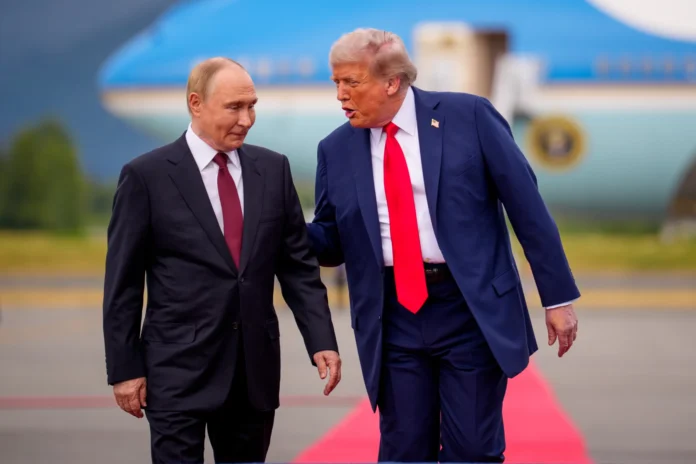
The following US Perspectives document was adopted by the National Committee of Socialist Alternative in mid-July. Since then a number of significant developments have taken place including the Epstein files scandal, the implementation of tariffs, negotiations over the war in Ukraine, and Trump’s mobilization of the national guard in DC. Despite the extremely rapid pace of events in this period, in our view these new developments reinforce the main political trends elaborated in this document.
1. The current pace of events in US society is absolutely dizzying. After the events in LA, the largest single-day of protest in US history, and Trump’s underwhelming military parade, the Trump regime appeared to be at its weakest point in his second term. Days later, a major gamble in attacking Iran followed by a ceasefire less than 48 hours later gave Trump and US imperialism a substantial, if temporary, victory. The day after that a self-described socialist won the Democratic primary for mayor in one of the most important cities in the capitalist world. Before the week was out the Supreme Court handed Trump one of his biggest victories yet, the curbing of federal courts’ ability to block his executive orders.
2. Such are the times we are living in. The US and global society in the era of Trump 2.0 is extremely volatile, and the gap between national and international developments is increasingly narrow. Major developments of the sort that used to happen once in a decade now seem to happen once a week. We need a strong degree of conditionality in all our perspectives, with a focus on identifying clear trend lines and outlining the key variants for how different elements of the situation might proceed.
3. It’s easy to get overwhelmed by the tornado of reactionary attacks, the global drive toward war, the chaotic zig zags of Trump 2.0, and the lightning pace of events. In this context, the development of accurate perspectives becomes all the more difficult and at the same time that much more necessary. Revolutionaries follow global, national, and local developments with a purpose. Our goal is to collectively achieve the greatest possible understanding of what is happening and why, and how things may continue to develop. From there, we hunt for every possible opening for the fightback against the regime, and intervene to both strengthen the wider struggle and build the forces of revolutionary Marxism.
4. There are many important issues that this interim statement was not able to address or has only touched on, such as the midterms, 2028, labor struggle, more on consciousness, the state of the left, climate, and more. Given the extremely fluid situation, we have sought to describe the main lines of development at this moment, and it’s clear we will need to produce another perspectives update before the National Convention in November.
State of the Trump Regime
5. When facing challenges and opposition at home, bourgeois politicians have often declared war abroad to restore support. This serves as a distraction from their problems, forces other factions in the ruling class including within their own party to get in line, and provides an opportunity to “rally around the flag,” forcing those with grievances to put them aside in the interests of the nation. For a far-right, strongman ruler of a deeply polarized country such as the US, this tactic can also be used domestically, declaring war on a section of the population. In the span of two weeks, Trump did both. When his domestic war on immigrants helped result in the biggest single day of protest in US history, he turned his fire to Iran.
6. Even as Trump’s overall approval ratings dropped throughout the spring, net positive support for his approach to immigration was a clear standout. As the trade war offensive stalled, divisions in the Senate mounted around the Big Beautiful Bill (BBB). In this context, and following the ignominious Trump/Musk breakup, the regime clearly viewed immigration as an issue they could use to divert attention from their problems and rally the base around. Operation At Large, and the ensuing activation of the military over the heads of city and state elected officials, served as a mechanism with which to assert federal authority over Democratic-run cities and states, Trump’s own personal dominance, and his willingness to “rule by the sword.”
7. But Trump’s attempt to crush the movement with the National Guard before it even got off the ground failed. The activation of the Guard, followed by bringing in the Marines, made the protests even more determined and ultimately played a key role in mobilizing millions to anti-Trump protests across the country on June 14. The arrest of union leader David Huerta, while not a premeditated move, is an example of the type of unintended overreach that will be inevitable as Trump goes further down the path of his authoritarian power grab and vicious attacks on workers and the oppressed.
8. Trump’s military parade, an attempt to flex his strongman rule both to the US population and on the world stage, was a dud. The parade was nowhere near the spectacle of those by other major authoritarian regimes, and a fraction of the target attendance turned out, exposing a real weakness of the MAGA movement at this stage, their inability or unwillingness to mass mobilize in the streets. Trump has not yet attempted to mobilize his base in a real way, and while that could certainly change at some stage if he feels backed against a wall, it’s not guaranteed to be successful.
9. Trump’s authorization of a direct strike on Iran, the first-ever acknowledged attack by any country against another’s nuclear facilities, was a serious gamble. The goal was an easy win that would yet again allow him to change the subject and get a boost in the polls, while dealing a major blow to a key adversary of US imperialism. In brief, the fragile ceasefire, which was agreed in the hours following Trump’s bombings, can be seen as a temporary success for Trump and US imperialism, though far more shallow than he hoped for. If the ceasefire unravels in the near future, the victory can be completely erased. On the other hand, if following the ceasefire a deal is struck that stabilizes Israel-Iran tensions for a period, Trump’s benefit from his gamble can deepen even further.
10. Compared to the momentum of Trump 2.0 in its first few months with executive order after executive order facing limited opposition, the Trump administration is now running into more challenges. This ranges from mass resistance in the streets to cracks in the Trump coalition, a stalled offensive on trade deals, and unfulfilled promises on ending the war in Ukraine. The more the regime feels backed into a corner, the more prone it will be to overreach in any number of arenas as it searches for new distractions and attempts to regain the initiative, which can have explosive consequences on the terrain of class struggle.
11. At the same time, even with these challenges, Trump 2.0 continues to rack up critical victories in the effort to drastically strengthen the power of the executive branch, like the late June Supreme Court ruling severely limiting the power of federal courts to stay Trump’s executive orders. The continued consolidation of the authoritarian power grab, difficulties and obstacles notwithstanding, serve to further underline that only the social power of the working class is capable of decisively defeating the regime.
12. How Trump 2.0 develops can be generally reduced to three broad variants, each containing its own sub-variants and possibilities. The first variant is that Trump’s reactionary agenda, including the rapid drive to consolidate an authoritarian power grab, succeeds in the end despite significant opposition in the streets because the social power of the working class is not decisively brought to bear. This could lead to a period of depressed struggle. The second is that the combination of overreach, mass upheaval and ruling-class division deals the Trump regime a decisive defeat at a certain stage, resulting either in impeachment and outright removal or transformation into a largely lame duck presidency. The third possibility is that the regime is not decisively defeated but through a combination of struggle, repeated opposition from sections of the ruling class, and other objective obstacles such as a recession, starts to run out of steam. While still doing a large amount of damage to workers and the oppressed, in this variant the regime would not be able to achieve its most far-reaching goals.
13. At this stage, all three outcomes remain possible. The situation will remain extremely dynamic and fast-moving, with one variant seeming more likely at one point only to give way to another upon the emergence of new developments. It should very much be stressed that we are still in the early stages of the working class’ battle with Trump 2.0.
Cracks in the Trump Coalition
14. The Trump coalition can be broadly divided into five component parts: sections of the ruling class, including a big section of tech billionaires, that supported him in 2024; the ideologically hard-right public figures and loyalists most immediately around him; the wider array of Republican elected officials which also includes members of the pre-Trump former party establishment; the most loyal die-hard section of his base that will likely stick with MAGA through thick and thin; and the wider section of the base which could more readily turn on, or at the very least drift from, Trump if things get worse. Within each part there are further subsets each with their own unique characteristics. At the helm sits Trump’s personal Bonapartist rule, both on behalf of US capitalism and imperialism, and at the same time a marker of its decline.
15. Only months into Trump 2.0, divisions have appeared, to a greater or lesser degree, in all five sections perhaps with the exception of the die-hard section of the MAGA base. These cracks are driven by objective developments and inherent tension between different class elements of the coalition. So far, each time a crack develops, Trump has for the most part been able to glue things back together using a combination of concessions and partial retreats, redirections, new distractions, and the threat of destroying careers. But glue doesn’t heal a crack, it simply holds the fragmented pieces together. The more cracks develop, the more vulnerable to events and attack the coalition becomes. This is why, from the point of view of the class struggle, perspectives on the divisions and contradictory interests within the Trump coalition are important.
16. Trump was able to whip the anti-deficit BBB holdouts in the House in line without a huge effort (mainly a 90-minute intimidation speech to a House GOP caucus luncheon). But while this was successful in getting the bill through the House, in the week following as skepticism in the Senate mounted, even staunch House loyalists began to turn on the BBB for different reasons. A huge reason for the timing of the escalation in LA was to distract from challenges with the BBB, which was beginning to face even more opposition in the Senate than the House. Revelations of just how much the bill would increase the federal deficit began to cause real concern in sections of the ruling class, while at the same time the assault on Medicaid threatened to upset sections of Trump’s base. The BBB’s problems also included the astonishingly ugly and embarrassing public break-up with the world’s richest man after he called the bill a “pork-filled… disgusting abomination.” After some twists and turns, Musk recently asserted that he will be launching a new party due to the BBB’s passage, though it’s very unclear if this effort will go anywhere substantial.
17. While on the whole the events in LA served to temporarily weaken Trump, they removed the spotlight from the BBB, which has proven to be enormously unpopular in polling so far, for a few weeks. The same pattern then continued to an even greater degree with Iran. In the days leading up to Trump’s midnight air strike, mainstream media spoke of the divisions within the Trump coalition nearing a fever pitch. Giving a cold shoulder to even high profile “America First” isolationist figures, Trump began to signal increasing alignment with the same war hawks of the former Republican establishment who dragged the US into Iraq and Afghanistan.
18. But even figures like Steve Bannon, who helped lead MAGA’s anti-war with Iran effort, made clear days before Trump’s attack that MAGA would acquiesce: “We don’t like it. In fact, maybe we hate it. But, you know, we’ll get on board.” Almost immediately after Trump addressed the nation announcing the air strikes, MAGA influencers and Republican electeds announced their congratulations and support in droves. Thomas Massie, one of the few Republican Congresspeople who vocally opposed the strike not just before but also after, was swiftly denounced by Trump who promised to support a primary challenger against him. TV ads are already running in Massie’s district saying he is siding with Bernie Sanders, AOC, and the Ayatollah, and calling to “fire” him. This is just as much a warning to other Republican electeds to not cross Trump, whether on Iran, the BBB, or otherwise, as it is a rebuke of Massie.
19. Cracks in the coalition will continue to appear. Trump will often have success at repairing those cracks in large part due to the high level of personal supremacy he enjoys within the MAGA coalition, a feature of his Bonapartist rule. At the same time, at some stage there could be actual breaks which come as a result of a deeper economic crisis, overreach and struggle that Trump can’t fully recover from, or otherwise. Glue can only be applied so many times. While the breaking up of the Trump coalition would be highly advantageous from the point of view of struggle, we also need to warn that without a clear working-class, left alternative, the danger of an even further right trend emerging is very real.
Economic Fragility Worsens
20. For several years bourgeois economists proclaimed that “US exceptionalism” meant relatively higher growth would continue compared with most other advanced capitalist countries. That is definitely over. A key immediate factor is Trump’s trade war but there are also underlying reasons that precede Trump as well. Despite the stock market’s recovery from the “Liberation Day” shock, the US now looks more like the norm rather than the exception, heading towards stagnation or worse: “The U.S. central bank sees lower economic growth, higher unemployment and higher prices amid major changes in U.S. trade policy and worsening geopolitical tensions.” (The Hill, 6/18/25)
21. The global economy is already poised to grow at its slowest pace since 2008 outside of the pandemic recession. Trump’s trade war has created a massive amount of uncertainty for investors and is therefore a huge factor in the worsening global situation. In fact things could get a lot worse. Most tariffs announced on “Liberation Day” at the start of April were paused for three months and only one of the promised dozens of “deals” has materialized.
22. But even before the ramped up trade war this was already a decade of low growth and inflation internationally, pointing towards “stagflation,” a condition which is hard for the economy to escape. This is the direction in the US, leading at some stage to outright and probably severe recession.
23. Growth in the US for 2025 has been revised downward by the Federal Reserve from 1.8% to 1.4%, compared to 2.8% last year. The Fed also projects that unemployment will rise to 4.5% by the end of this year. Headline inflation in the US remains fairly low although working people know that the cost of many day-to-day necessities continues to go up. Part of the reason it isn’t worse is that many companies made large purchases of goods from abroad before tariffs kicked in. Stockpiles will run out in coming months and tariff costs will then be largely passed on to consumers. This will worsen Trump’s approval ratings on economic issues even further, and can lead to more cracks in the coalition as well as provide more combustible material for struggle.
24. There has been more discussion among bourgeois commentators of the record federal debt which is now comparable to the level after the massive expenditures of World War II. It is heading towards 125% of GDP by 2034, the highest level in the entire history of the republic. Debt, even significant debt, does not have to cripple an economy if there are low interest rates and real growth. But these are the conditions that precisely may soon be missing. The government already pays more on interest than on the military and the BBB, in whatever form it passes, seems guaranteed to further raise the deficit by a considerable amount.
25. The BBB will also have wide-ranging and extremely damaging impacts beyond increasing the deficit by over $3.3 trillion. According to some estimates, at least 17 million people will lose their health insurance as a result of over $1 trillion in cuts to Medicaid and restrictions in the Affordable Care Act, and hundreds of rural hospitals across the country will be forced to close. As the full effects begin to be felt, this will very likely undermine Trump’s support to some degree, especially as 60% of the tax benefits in the BBB will go to the top 20% of earners, while the lowest-income households will only see a tax reduction of around $150.
26. If foreign investors stop seeing the US debt market as a safe haven then there will be even bigger problems. All of this is not to mention the bubble in private equity funds, the potential for big layoffs in certain sectors due to AI, and other features that could trigger a financial crisis even more quickly.
27. The key underlying factors, despite all sorts of specific manifestations of capitalist sickness, as we have stressed, are that there remains vast overaccumulation of capital in the US and world economies and that a world without a singular hegemonic power will be one in which economic crises will be far less manageable.
Mass Deportations and Anti-ICE Protests
28. With the current pace of events, Operation At Large and the protests in LA have been largely left behind by the national news cycle. The popularity of Trump’s immigration agenda was dealt a real blow by the protest movement culminating with the historic No Kings protests on June 14, and the seeds have clearly been sown for future struggle against ICE. However, with no leadership capable of pointing to the necessary next steps and organizing the movement beyond spontaneous actions, significant mobilizations such as in LA and nationally on June 14 have died down, giving Trump the space to continue his terror campaign against immigrant communities, in southern California and elsewhere.
29. ICE arrests are up dramatically compared to a year ago—more than doubling in 38 states and more than tripling in 21. There have been approximately 2,000 ICE arrests just in Los Angeles since the June 6 raid at Ambiance Apparel. The number of deportation flights also increased in May, indicating potential results from the increase in arrests nationally. At the same time the ramp-up in arrests has been happening, the number of people crossing the southern border has plummeted, which makes the total impact of Trump’s policies so far greater than just the number of arrests and deportations. Beyond raids in workplaces and arrests in communities, masked ICE agents have been stationed outside courtrooms in some cities, picking people up who come in for routine immigration hearings.
30. The anti-ICE protests confirm that mass deportations, combined with the further use of the military and the brutal repression of protest that will inevitably follow, will simply not be possible without a massive reaction in the streets. Trump has promised a focus going forward in big “blue” cities like LA, Chicago, and New York City and we should expect that a big wave of raids in places like this will provoke a new outbreak of protest similar to, or even larger than, LA. Whether Trump decides again to activate the National Guard will be a significant factor in how big they become and how far they spread. In addition, individual instances of violence or overreach by ICE officers, arrests of US citizens, or deaths in ICE custody could all, among others, be sparks that set off large street protests again.
31. As we have said, Trump will not be able to achieve his campaign goal of deporting all 11 million undocumented immigrants, or even the significantly pared down target of 3,000 arrests per day. In addition to the element of class struggle, there are also certain objective limits that Trump will run into, as well as opposition from a section of the ruling class.
32. For one, the deportation machine as it currently stands is simply not capable of arresting, detaining, and deporting that high a number of individual immigrants. Dozens of detention centers are already over capacity, leading to incidents such as the mid-June riot and 4-person escape from a detention center in Newark. This is even after ICE increased the number of buildings it holds immigrants in from 115 to 142 since January. The BBB allocates an additional $185 billion toward immigration enforcement which, while it will certainly expand capacity, will neither be enough, nor fast enough, to meet their stated goals.
33. In addition, our pre-inauguration perspectives material outlined two main areas where, if Trump went too far, bigger sections of the ruling class would intervene: tariffs and immigration. This certainly took place after Liberation Day, when market tumult led Trump to implement a 90-day pause. It happened again in early June after workplace raids and mass terror led sizable numbers of workers to not turn up to work in key sectors. Sections of the bourgeoisie rapidly mounted pressure on Trump, leading him to announce an end to workplace raids in farms, restaurants, and hotels. While Trump later reversed the decision, another more severe ramp-up will undoubtedly spur a similar panic from sections of the ruling class. Mass deportations on the scale Trump has been proposing would create severe economic disruption that the overwhelming majority of the ruling class are not willing to tolerate, despite being fully on board with increased xenophobia generally as part of a divide-and-rule agenda and reassertion of nationalism.
34. But even if the Trump administration can’t reach their stated goals, as we’ve explained, their main concern is not hitting a specific number of deportations, but rather sowing fear and division, normalizing the raids and terror in workplaces and immigrant communities, and asserting control over Democrat-run states and cities. Despite the obstacles they ran up against in LA, this project is continuing and can be a renewed impetus for struggle even if large street protests around deportations subside for the time being.
35. The “No Kings” protests were the second time a pre-planned national day of action was given a significant boost by a Trump overreach in the days prior, the first time being April 5 coming three days after Liberation Day. June 14 was very likely the largest single day of protest in US history, with approximately 2% of the population marching, surpassing the 2017 Women’s March. There was a noticeably higher energy level than previous anti-Trump protests this term and more of a sense that Trump can be defeated, or at the very least pushed back.
36. Despite these steps forward, both the anti-ICE protests and the anti-Trump movement as a whole are still overall politically very weak. While a significant display of strength, June 14 also served as a pressure-release valve, with the protests dying down shortly after (the war with Iran also played a role in pulling attention away from immigration). At this point, the main lasting organization out of the anti-ICE protests seem to be “ICE watch” groups. While these can play a role with rapid response to ICE raids, they are a purely defensive strategy that must be paired with mass, offensive action. Our Union Members Against ICE initiative, coupled with the call for the labor movement to escalate the protests to a one-day strike, set a small but important example that pointed in this direction.
37. The labor leadership is, broadly speaking, offering nowhere near the sort of lead necessary to challenge either the war on immigrants or the colossal scale of attacks on the whole that workers and the oppressed are facing. The leading figures in the left bureaucracy of the early 2020s have either gone fully over to Trump’s camp (Sean O’Brien), are content with criticizing Trump in words while offering no real lead in struggle (Sara Nelson), or somewhere in between (Shawn Fain). At the same time, we should remember that the labor movement played no significant role in the early anti-Trump movement in 2017, only for the West Virginia teachers strike less than a year later to jumpstart a period of upsurge in workers’ struggle that has lasted until today (with of course significant ups and downs in that time). Trump’s continued erratic zig-zags and desperate overreaches at moments of weakness will inevitably provoke more struggle, providing critical opportunities and pressure for the labor movement to become involved in a more serious way.
38. The US ruling class is preparing to get fight-ready with China, envious of China’s top-down, union-free economy. Trump’s colossal attack on labor, stripping over a million federal workers of their union rights, is part of its response. This defeat was achieved without any significant mobilization by the labor movement. The developing climate of fear has emboldened the employers to attempt to reverse labor’s gains of the past period. The battle over jobs and pay in the public sector, especially for teachers, will be a key determinant in shaping the way forward.
The War with Iran
39. The current outcome of the “12 Day War” between Israel and Iran raises a number of questions, and as with other aspects of perspectives we need to be conditional about where this is leading. Over the past 21 months since Hamas’ attack on Israel, the Israeli state has waged a ferocious military campaign on multiple fronts against its regional foes along with a genocide in Gaza. This has reshaped the strategic balance of power in the Middle East.
40. Netanyahu saw a historic opportunity with the degradation of the “axis of resistance” of Iranian proxies throughout 2024 and seized it with Trump’s (perhaps initially reluctant) agreement to directly attack the Iranian Shiite clerical regime and the Revolutionary Guards force on which it rests. These are historical adversaries of Israeli and US imperialism going back to the Iranian revolution that overthrew the Shah and his pro-US regime in 1979.
41. The question of Iran’s nuclear program and trying to stop Iran from developing nuclear weapons has also been a longstanding issue for both Israeli and US imperialism, but there have been different approaches. This includes the Obama-era Iran Nuclear Deal, which Trump ripped up. While Trump’s initial claims were that Iran’s nuclear facilities had been completely destroyed, all available intelligence clearly states this is not the case, and that the strikes only actually delayed Iran’s nuclear program, and any attempt to build a nuclear weapon by less than six months. The Iranian regime may conclude that their best option now is to go completely underground with a drive to develop nuclear weapons as soon as possible, seeing the possession of nuclear weapons as their strongest chance of deterrence against future attacks. This would point to the resumption of war unless a new deal is struck to end the program.
42. The wars in the Middle East cannot be separated from the wider inter-imperialist conflict between US and Chinese imperialism. The diminishing of an ally of Russia and China, Iran, in such a humiliating way also weakens their own global position. In reality Russia and China have been completely sidelined in the Middle East, with China reduced to denunciations at the UN. Of course it has also been a goal of US imperialism, including of Democratic presidents like Obama and Biden, to pivot from the Middle East to East Asia, in order to focus on the central conflict for global hegemony with Chinese imperialism. This has been only partly successful, particularly with the quagmire proxy war in Ukraine underway since early 2022. A resumption of war in the Middle East would delay this effort even further. Now that US imperialism has become directly involved in Israel’s military conflict with Iran, it will be difficult for Trump to avoid getting involved without looking weak if fighting breaks out again.
43. Trump, as said earlier, decided to commit to a historic escalation based on the idea that this would be a “quick and easy” win. He also appeared to have signed up to Israel’s regime change mission which led to serious opposition within his own camp. Of course all of it makes a nonsense of his whole presentation as a “peace” president, but success in winning the ceasefire, for now, and lack of US casualties, again, for now, will temporarily silence most critics. This being one of Trump’s main lessons – that entering or declaring wars can deliver “easy” wins and help him overcome obstacles domestically – is quite dangerous.
44. The US and Israel have no serious plan for what would replace the Iranian regime if it collapsed. Historically “regime change” has not been brought about by bombing campaigns, but has required internal revolution or a ground invasion. While large sections of the Iranian population despise the clerical regime, there has been in the short term a significant rallying to defend the country against Israel’s unending brutal assaults. So far this has boosted support for the regime, though this can change. The US does not want a popular revolution, and a ground invasion is excluded at this time. So while in the short term the Iranian regime is very unlikely to collapse, its effective defeat in this conflict has further undermined it.
45. Both Trump and Khamenei have an interest in trying to bring this phase of the war to an end. In fact, more limited war aims may have been a condition that Trump placed on the Israeli government for entering the conflict, though it remains to be seen if Netanyahu, who clearly wants to deal Iran an even more decisive blow at some stage, will adhere to this. Trump has a lot of deals he wants to pursue with the Gulf monarchies, which can’t proceed until Israel’s wars including the genocidal war in Gaza are concluded.
46. If the ceasefire holds, Trump can claim a huge victory on the international stage. In the medium term the limits of US power will be fully exposed but for now, Israel, backed by the US, has demonstrated that it is the unchallenged dominant regional military power. But this victory for the US, if it holds, doesn’t reverse the other features of US decline that have reasserted themselves since Trump began his trade war. We have said that the advantage in the inter-imperialist conflict will shift again and again. These events once again confirm this.
47. But for a ruling class that is trying to build support for militarism and lay the basis for direct involvement in wars to come, it is clear that they face major obstacles. After the historic defeat of US imperialism in Vietnam, the ruling class spent twenty years trying to overcome the “Vietnam syndrome,” the popular opposition to further military adventures. They celebrated the fact that they were able to intervene and occupy Afghanistan and Iraq after 9/11 though they faced significant popular opposition to entering Iraq, which grew as the war dragged on with no end in sight. However it is clear that twenty years later the “Iraq/Afghanistan syndrome” caused by those military disasters is still alive and well.
48. While the outcome of the “12 Day War” has temporarily strengthened US imperialism’s position globally, US involvement is broadly not popular among the domestic population, who instinctively see it as a step towards further military involvement. A CNN poll taken right after the bombing showed a 56% majority opposed to the strikes (and 58% saying they will “make Iran more of a threat to the US”). The “partisan divide” is also extremely clear: 88% of Democrats disapproved and 82% of Republicans largely approved. It is clear that while the Republican base might approve of a “quick and easy” victory, there is very little stomach for a longer engagement and certainly not for “boots on the ground.” So in the short term Trump succeeded in temporary domestic distraction but as the global drive toward imperialist war continues, this problem for the ruling class will crop up again.
Crisis and Debates in the Democratic Party
49. The Democratic Party will continue needing to balance between two overarching, and sometimes conflicting, objectives. On the one hand, they have to continue serving the needs of the ruling class in the new era. This means an overall rightward ideological shift including fostering divisions like xenophobia and transphobia, support for strengthening US imperialism’s position in the global inter-imperialist conflict, and disciplining the working class to prepare for war, increased inequality, and climate chaos.
50. On the other hand, they must be seen as an effective force opposing Trump, as that is their only path to electoral success in the midterms and 2028, and to keeping big sections of their base from becoming so frustrated with their ineffectiveness that they ditch the party entirely. This side of their needs has produced a reemergence of some features of the 2010s debate over the “soul” of the Democratic Party, though with limitations and differences. Initially, the establishment has been broadly okay with Bernie and others tacking to the left, as it offers left cover for their own glaring ineffectiveness and unwillingness to meaningfully oppose Trump. But if left figures get anywhere close to posing an actual threat to the supremacy of the corporate establishment, they will not hesitate to crack down and hard. This can be seen in the sheer panic over Zohran Mamdani’s victory in the New York City mayoral Democratic primary among the party’s top strategists and corporate donors.
51. On the national level, a clear limit to the Democrats’ ability to feign left in opposition to Trump will be the bipartisan commitment to backing up the Israeli state as well as US imperialism’s existential struggle with China. Overwhelmingly Democrats in Congress and other top party leaders were careful to not criticize Trump directly entering Israel’s war by attacking Iran, focusing instead on the fact that he didn’t first seek congressional approval. Meanwhile Zohran Mamdani’s victory in NYC exposes the limits of the establishment’s ability to use Israel as a cudgel against the left.
52. Directing all anti-Trump sentiment toward the midterms will continue to be core to the party’s approach. This is a terrible strategy that we must firmly oppose at every opportunity. Our points around the need for working-class resistance to Trump, fully independent from the sections of the ruling class and capitalist political establishment opposed to him, are paramount. Our call for a new working-class party is an important crystallization of this concept that millions of working people agree with and could get behind if there were leading figures or organizations pointing the way.
53. There have been potentially significant developments like Randi Weingarten, president of the American Federation of Teachers, and Lee Saunders, president of American Federation of State, City, and Municipal Employees (AFSCME), stepping down from their positions on the DNC, citing explicitly their frustrations with the party albeit tepidly. While it remains to be seen if this leads to anything tangible, it is certainly a warning shot along with Mamdani’s victory in New York. We should continue to closely monitor any development, no matter how small, in the direction of forces in the anti-Trump or workers’ movement breaking from the Democrats and take initiatives to help push this process along.
A Socialist Mayor in New York City?
54. Zohran Mamdani’s primary victory was a political earthquake and will become an ongoing reference point for a layer of radicalizing workers and youth nationally. In a stunning loss for the Democratic establishment and even the wider ruling class, it clearly showed that a large section of the Democratic Party base wants to see a more combative approach to Trump and that a broad left program can gain mass support. Zohran’s call for freezing rent, free buses, city-owned grocery stores, a $30 minimum wage and more gained mass support. Like Bernie Sanders, his version of “democratic socialism” is more akin to social democracy than genuine socialism. Nonetheless, contrary to the neverending fear mongering about “electability” by the Democratic establishment, Zohran’s victory proves that left-wing candidates can in fact win, including in big races.
55. Following the primary win, a section of the left (like DSA whose post-election statement proclaims that “socialism has won” in NYC) is now vastly underestimating the challenges that lie ahead in the general and the fight to win even small parts of his program if Zohran wins in November. However, the strong inclination of a majority of the Democratic establishment, backed by finance capital and the real estate industry in NYC, will now be to line up behind Cuomo and/or Adams to crush Zohran in the general election. At the same time, Trump’s attacks on Zohran, which will continue, pose problems for the Democratic establishment who don’t want to be associated with Trump. Mamdani will continue to be attacked for his stance on the genocide in Gaza and redbaiting will be drastically ramped up. Zohran’s weakness in majority-Black precincts is a warning sign of the divisions the establishment will sow to try and stop him from winning the general election, and must be urgently addressed.
56. But while the ruling class clearly wants him stopped, they may not succeed. Both Cuomo and Adams are deeply damaged, corporate candidates who will have little to offer other than a negative campaign against Mamdani. Meanwhile, another wing of the establishment, alongside many union and NGO leaders, is already declaring their support for Zohran on the basis of containing the damage and co-opting him. If Zohran wins in November, which is a distinct possibility, this co-optation effort will be put into hyperdrive.
57. The mayor of New York City is the executive of the capitalist state in the epicenter of Western capitalism. Zohran will be in charge of the NYPD and sit on the opposite side of the bargaining table with public sector unions like teachers, nurses, transit, and sanitation workers. This means the pressures on a left-wing mayor, even one who genuinely believes in their program, to betray the working class is even greater than on a left-wing city councilor or even congressperson, who is one among a larger body and can play the role of a minority opposition. We are not likely to see a slow-motion co-optation like with AOC, which took place over a period of years, but rather a much quicker acquiescence to the needs of capital, even if this process is uneven and not without many frustrations for the ruling class. This is especially the case considering Zohran’s and DSA’s reformist nature and the lack of a revolutionary organization preparing him for the battle and holding him accountable.
58. It is extremely unlikely that Zohran avoids becoming largely co-opted and defanged. Even in the final weeks of the primary campaign he began to water down elements of his program such as dropping the call to defund the police, and the pressure to do more of this will continue. Despite this, it’s critical that we find creative ways to fight alongside the best elements energized by his campaign while raising our points and proposals in a principled manner. More material on our approach to the campaign is being drafted by the NYC organization in coordination with the EC.
Only the Working Class Can Stop Trump
60. Six months into the most dangerous and reactionary presidency in decades, it is amply clear that there are no saviors coming from the ruling class. Trump has run roughshod over the federal bureaucracy, Congress, elite colleges, and the rights of unionized federal workers. He’s ramped up a terror campaign against wide sections of the immigrant population and waged war on trans rights. He’s preparing to take away health insurance and other essential programs from millions of working class people.
61. Congressional Republicans continue to bow before their party’s president, and congressional Democrats put up only token resistance. The Supreme Court intensifies its turn to strengthening the presidency in line with our analysis of parliamentary Bonapartism, and corresponding with the ruling class’ new needs in this period of sharpened military conflict and imperialism. Of course finance capital and other sections of corporate America will continue to push back, but only to defend their bottom line.
62. The only thing that has had a real effect is mass action. But as critical as that has been, without sustained organization independent of the Democrats, and especially without the social power of the working class being brought to bear, it won’t be enough to decisively stop and reverse this juggernaut. Trump could also lose elections like next year’s midterms, but having the do-nothing Democrats back in charge of the House will be little more than a limited reprieve. Congress’ role is being actively diminished, and at the end of the day the Democrats agree on numerous parts of Trump’ agenda including closing the border, disciplining the working class, and preparing for bigger conflicts with Chinese imperialism.
63. This fight is not over and Trump can be beaten. Zohran Mamdani’s victory has given millions hope. But it will take massive struggle, working class power, and political independence to finish the job.