

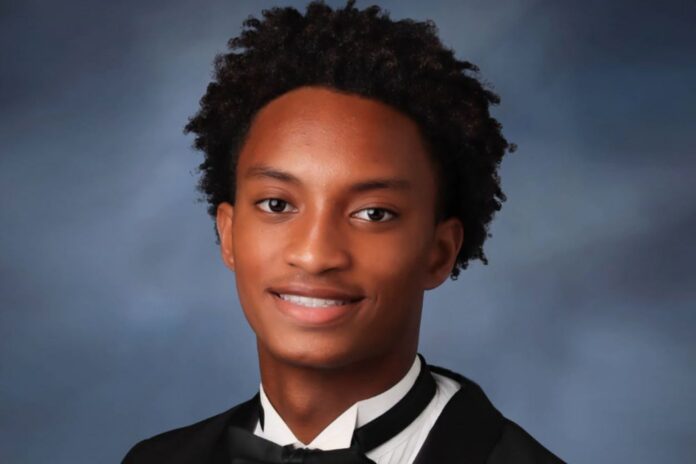
On July 6 on the coast of Horn Island, Nolan Wells, an 18-year-old Black student in Mississippi, was found dead facedown on a beach. After his body was found, officials quickly stated they did not suspect foul play, but given the circumstances of his death, his parents and those that followed the story through social media were not satisfied with the lack of urgency and transparency in the investigation. At the root of this is many people’s feeling that Wells’ race played a role in his death and is continuing to play a role in how the case is handled.
Grappling with the unanswered questions amid a society wracked with anti-Black violence, millions of Black people are seeing Nolan Wells’ death as connected to the rise of anti-Black racist injustice going unanswered.The racist murders of Kohen Riley, Corey Ruiz, and others are stirring a deep righteous anger brewing inside of Black America against this barbaric situation, and many are justifiably suspicious.
A Continuation Of Jim Crow Terror
Unfortunately, unanswered and under-investigated deaths are not unfamiliar to Black Americans. Particularly in the South, these have been and continue to be constant points of contention between the state and the Black community. In 2004, in Mississippi, Roy Veal was found hanging with a pillowcase over his head. In May of this year, 16-year-old Black girl Juliana Nzita of North Carolina was found hanging from a tree. Both were ruled suicides without much investigation. Just this month, 29-year-old mother of four Tasia Fortune was found hanged in Mississippi, and while officials have not yet released a cause of death, the worries are the same.
During the Jim Crow era, lynching was yet another tool of white supremacy and an unofficial tool of the anti-Black legal system. Officials failed to pass federal anti-lynching laws and local governments purposefully turned a blind eye, rarely convicting anyone of lynching crimes even in areas that did pass these laws. While in the past, lynchings were often more overtly condoned public spectacles, today, perpetrators commonly are forced to operate in the shadows. But much like today, these crimes went unanswered or uninvestigated, leaving Black communities in distress.
These cases do not just come down to deciding whether or not foul play is involved—they serve as a way to uphold fear in the Black community. Capitalism relies on anti-Black violence and racism to dampen mass action and opposition within the Black community. Furthermore, fear of exclusion and discrimination weakens the much-needed solidarity between the struggle for Black liberation and wider working-class struggles.
Fighting Racism Means Fighting Capitalism
Capitalism and racism are inseparable. Capitalism was built on an international chattel slave system that fueled the development of modern industry and global finance. Today, anti-Black racism has continued to be used as a means of keeping the working class divided. By creating competition and racially-driven animosity among workers, ideas of natural inequality and inferiority are maintained to the benefit of the bosses.
In order to combat the far right and anti-Black racism, multi-racial, working-class mass movements are necessary. We are constantly shown that neither elected officials nor the capitalist courts are on our side. Earlier this year, we saw workers in Minneapolis conduct a general strike that forced an end to Operation Metro Surge. Strikes, boycotts, and mass movements are not new to the Black community and were crucial for many civil rights-era wins. The Black Lives Matter movement and George Floyd uprising have shown both the wide appeal and potential for mass action, but, without a strong working-class strategy, were watered down and co-opted by the establishment.
The fight for a world without racism is a fight for a socialist world and an end to capitalist divide-and-rule. Black liberation and ending racial oppression must be a fight against global capitalism based on international solidarity. Nolan Wells, Corey Ruiz, Kohen Riley, and numerous other Black people should still be here, and we need to continue the fight for a world where Black people can grow up and live without fear.