

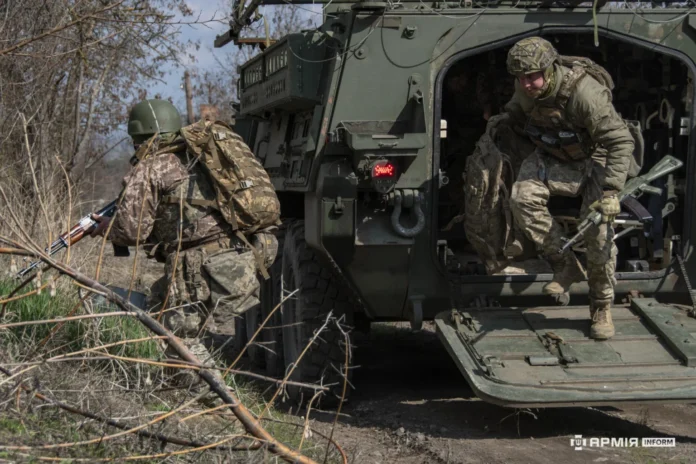
More than four years in, the Ukraine war is the longest European military conflict since the end of World War II. The body count is growing and the damage is escalating, but there has been no progress toward ending the war. On Friday, Vladimir Putin rejected a call from Zelenskyy for new talks, saying “I don’t think there’s any point for now” and reasserting Russian “red lines.” Zelenskyy, despite recent rhetorical overtures, has been similarly intransigent, continuing to refuse territorial concessions which almost certainly would be necessary for any sort of ceasefire to occur. This is because the momentum in the conflict, which has swung back and forth like a pendulum over the course of the war, is beginning to suddenly swing behind Kyiv. At the same time, both sides are facing mounting pressure on multiple fronts—military, economic, and political—and are showing signs of strain as war weariness grows.
The High Costs
As of mid-May, reports have indicated that anywhere between 218,000 and 500,000 Russian soldiers have been killed. While figures are somewhat shakier on the Ukrainian side, estimates from the Center for Strategic and International Studies as of December 2025 showed that their losses could be around 140,000. While numerically lower than the Russian figure, this represents a much bigger percentage of the population in comparison. These do not include the huge numbers of those maimed but not killed or the many civilians killed, injured, or displaced by the conflict.
These numbers will only mount over the next period, as both sides use missiles and drones to strike deeper into each other’s territory, targeting more non-military sites and densely populated cities. June 2 saw the biggest flurry of Russian missile and drones launched since the beginning of the war—73 missiles and 656 drones—against Ukrainian cities, with the brunt overwhelmingly focused on Kyiv. On June 3, Ukraine struck an oil terminal in St Petersburg during a major economic summit dubbed “Putin’s Davos.” This high profile move, coming only days after a large-scale drone attack which killed four civilians in Moscow, was both a warning to Putin and an attempt to escalate Russian popular discontent.
This ramping of strikes on civilians and infrastructure strikes underlines the predicament both sides find themselves in. After four and a half long years of war, the conflict continues to be one of a meatgrinding stalemate. Though May saw something of a landmark in being the first time since 2023 Russia lost more ground than it gained, there has not been a fundamental shift of momentum in the Ukrainian direction on the front line. Though Russian moves are painstakingly slow, battlefield reports in previous months indicated they were still making some advances. They remain in control of around 20% of Ukrainian territory. However, Putin is certainly under increasing pressure.
Implications Of The First True “Drone War”
One major factor in this change has been the increasing effectiveness of Ukrainian aerial warfare. The war in general has seen Ukraine become an innovator and expert in the production and use of drones in particular. It is the first military in the world to launch a branch specifically for drones and robotic weaponry, and recently went so far as to offer its expertise to the US and Gulf states for the ongoing quagmire in Iran. Since 2022, it has ramped up its productive capability for dirt cheap ($200-300 per unit) FPV drones from 3-5,000 to now over 8 million a year as of 2026. Zelenskyy claimed in April that “up to 90% of Russian losses are caused by Ukrainian drones.”
In recent months, Ukraine has mounted steadily deeper attacks not just on Russian troops but command posts and crucial logistical hubs and infrastructure like oil refineries. Oil facilities suffered 30 strikes in May, the highest since the beginning of the war, which is creating an oil production crisis in Russia, with levels reportedly at a 16 year low, undoubtedly affecting its military effort. The Russian energy ministry recently admitted that the strikes have caused “certain problems at the moment.” The Economist reported that during Spring 2026, Russian oil output fell by 15%, despite the bonanza provided by the price hikes and partial sanctions relief as consequences of the Iran war.
Nonetheless, Ukraine is facing its own military challenges. European powers have stepped up since 2025 to try to fill the gap left behind by the disengagement of US imperialism. The EU recently approved a massive €90 billion loan to Ukraine, which had previously been put on indefinite hold due to opposition from the now defeated pro-Russian right-winger Viktor Orban of Hungary. This will keep the country from total economic collapse in the short-term, but only covers ⅔ of the state’s budget. Its wartime economy relies almost exclusively on external funding and its GDP is increasingly consumed by mounting war debt.
Furthermore, the European powers are not capable of fully filling the military gap left by Trump’s pullout. In particular, at this time they have no substitute for the US-made Patriot anti-ballistic missile systems (ballistic missiles were recently termed “Russia’s last big advantage on the battlefield” by Zelenskyy)—which are both extremely expensive ($4 million a piece) and are facing a dwindling supply due to the prioritization of Trump and Netanyahu’s war on Iran and long production times. This weakening of defensive capabilities by Ukraine has opened up what some commentators have termed a “window of vulnerability” for Russia to intensify missile strikes in the short-term. Ukraine has responded with a plan to produce cheaper domestic alternatives but their timeline and efficacy is still unclear and it will be difficult to test them before their deployment.
European desires to “protect” Ukraine are inherently linked to imperialist goals of massively increased militarization throughout the continent. Even the recent EU loan to Ukraine comes with strings attached, being underwritten by the expectation of (highly unlikely) “war reparations from Russia.” Yet for European governments, their ambition has outpaced their actual progress. At the same time, they face growing opposition internally to their goals. The anti-conscription school strike movement developing in Germany is one such example. The reality of increased defense spending at a time of cuts and austerity for working-class and young people will only intensify this mood and make it more complicated to achieve their ends.
Pressure Leads To Escalation
It’s precisely the lack of momentum in the conflict that has led to the recent exchange of high profile strikes. Zelenskyy has indicated that he is desperate to end the “hot phase” of the war by winter—by which time Russian strikes on critical infrastructure will have the greatest effects on the population. Similarly, at the annual Victory Day Parade in Moscow, Putin said in reference to the Ukraine war: “I think that matter is coming to an end.” This statement is more reflective of desire than reality.
The longer the war goes on, the more unpopular its two central protagonists—seen as representative of the war itself—have become. This is what has driven their statements about ending the war quickly. Zelenskyy, appearing as an international folk hero at the beginning of the war, has slid in popularity. His use of the war for a dictatorial consolidation of power, massive corruption scandals within his regime, forced conscription gangs and more have battered his reputation and increased oppositional sentiment. His popularity has collapsed by over 30 percentage points since 2022 in most polls. In a recent survey of “most trusted” Ukrainians, he fell fourth behind former general Zaluzhny (widely seen as his main rival), his chief of staff and an international boxing champion respectively.
In Russia, while the energy price rises and partial lifting of oil sanctions related to the shortages caused by the Hormuz crisis have provided a lifeline, the rising cost of the war and the associated damage to infrastructure and draining of reserves is causing panic among the elites. All major oil refineries in central Russia have halted or decreased production at some point. Experts estimate it would require at least a year of oil being over $100 a barrel to alleviate the prospect of major defense budget cuts, something impossible for Putin to contemplate. At the same time, Russia’s economy is increasingly stagnant, with growth recently being downgraded from 1.3 to 0.4%. This, plus the massive human cost of the war, is igniting more open skepticism of Putin and the war. There are even reports of Russian oligarch Roman Abramovich traveling to Kyiv for secret talks with Zelenskyy last month.
Zelenskyy has continued to delay open elections under the auspices of martial law. And while Putin has nothing to fear from Russian “elections,” given their manipulated nature, he lives in fear of another coup attempt like the Prigozhin affair in 2023, or a renewed upsurge of anti-war action. Thus both sides are eager to ‘bring the war home’ by attacking more civilian targets and inflicting economic pain in hopes of compounding domestic pressure on their rivals.
The Danger Of Expansion
While the war is expanding into strikes on urban centers, with bloody consequences for working people, there is still a danger of further escalation and expansion of the conflict. There has been an increasing number of incidents of drones making forays into other nations. Romania, Latvia, Lithuania, Estonia, Finland, Moldova, and Poland have all been affected in recent months. The Latvian incident provoked such a severe political crisis that it brought down the sitting government.
These incidents are feeding the bellicose agenda of European powers, who are using them to ramp up their own militaristic rhetoric. The president of Moldova (a non-NATO state and constitutionally “neutral” nation) has put forward legislation to overhaul its defense industry with massive investments. And while NATO has not yet chosen to declare these as deliberate attacks that would trigger the joint defense clause, governments from Poland to the UK have used them to justify their spending plans. This has included massive investment in production and advancement of drone technology.
These investments are clearly not just for Ukraine’s benefit but to prepare for future conflict with Russia or other imperialist powers. The revolution in drone warfare developed through Ukraine is now being tested elsewhere, for instance through Ukrainian “defense pacts” with some Gulf states. Much like other historical leaps forward in military technology, this will not make wars less barbaric, but rather the opposite. And even though the nuclear taboo has not yet been broken, recent strikes near nuclear plants and used fuel depots mean more of a chance of a misguided missile or drone crossing that boundary.
What Way Forward?
With the US stepping back, European leaders have indicated their desire to pick up the mantle for negotiations—something which Putin has even expressed openness to. The joint meeting of British Prime Minister Keir Starmer, French President Emmanuel Macron and German Chancellor Friedrich Merz with Zelenskyy in London on June 7 is both a step in this direction, and an attempt to distract from the shared unpopularity at home.
Still, none involved entertain the idea that the war can be concluded without the involvement of the US. But although the Trump regime would like to see a deal, even reportedly appealing to China to help bring the war to an end, it is not going to do anything to facilitate this itself. The red lines have not moved. While an agreement can never be ruled out, the pattern right now is for both sides to try and escalate to force a breakthrough before the pain becomes too much.
To end the bloodshed and prevent dangerous further escalation, a new anti-war movement must be built, linked to the social power of the working class. Given the repressive apparatuses in Moscow and Kyiv, this would inevitably have to be linked to the question of the overthrow of the existing regimes.
Nor is it just a question of domestic developments in Russia or Ukraine. The complicity of other imperialist countries is also what is enabling the conflict to continue. Meanwhile this war is being used to prepare for future wars—which could be bigger and even more deadly. One can see how technological and strategic lessons from Ukraine are now being deployed by US imperialism in the Middle East. And China will have adjusted its strategy concerning any future potential conflict with Taiwan based on this war.
The building of an anti-war, anti-imperialist and anti-capitalist movement outside of the two combatant nations, based on a program of genuine working class internationalism, can give confidence to workers and youth in Russia and Ukraine to move into open organization and revolt. Additionally, the war in Europe cannot be extracted from the general global conflict that is developing for imperialism. For the ruling classes, it is a fight to the death for the redivision of the world. For us it’s a fight to our own deaths for their benefit. Only the might of the global working class mobilized in a struggle for a revolutionary socialist transformation against war, imperialism, and capitalism can prevent us from their destructive future.