

This article was originally published in early November 2025, in issue #2 of International Marxism, international political journal of International Socialist Alternative, which Socialist Alternative in the US is a part of. Click here to subscribe or to buy a copy of the full issue.
He didn’t end it in 24 hours, or even 24 weeks. Indeed, in August 2025, Donald Trump was forced to admit that “I thought that maybe this would be the easiest [war to end]. And it’s not the easiest one. It’s a tough one.”
Not only did the Ukraine war not end following his reelection as U.S. president, it continued to escalate. Since Trump’s reelection, the rate of drone and missile launches from Russia into Ukraine more than tripled. The Ukrainian military’s attacks inside Russia have likewise intensified, targeting both energy and military infrastructure. Zelensky has also threatened to launch missile attacks deep into Russian territory, in what would be another massive and dangerous escalation. Meanwhile, on the “meatgrinder” front lines, troop movements, while still slow and coming at an astonishing cost to human life, have become more dynamic as Russian territorial gains accelerate.
At the time of writing, all the promises of imminent progress toward peace after Trump’s much-hyped Alaska summit with Putin appear to be vanishing into the background, as both sides prepare for brutal autumn campaigns.
But why is this war such a “tough one” to end? Fundamentally, the answer lies in the deep strategic imperialist interests at stake in this historic armed conflict. This article is an attempt to take a deeper look at the war’s significance and what a socialist program to end it looks like.
Breaking the Rules
Almost four years ago, as Russian armed units gathered in preparation for their full-scale invasion, few—including in the Ukrainian government—really believed they would do it. According to the “common wisdom” of the era of neoliberal globalization, this was simply the kind of thing that could not happen. A full-scale ground war, on European soil, with a major nuclear power fighting a heavily armed U.S. ally, was most certainly not within the established “rules of engagement.”
But the war did happen, and it happened precisely because this era and its rules of engagement had been thrown in the dustbin of history. The geopolitical equilibrium which kept the guardrails on global conflict for decades had been shattered. The new era of heightened imperialist conflict, war, and militarism had well and truly begun. The Ukraine war both expressed this trend and dramatically accelerated it, making it truly an epoch-defining conflict.
Red Lines Erased as Guardrails Come Off
This pattern, of sacrosanct “red lines” being bulldozed through one after another, has continued to mark the conflict ever since. Once Putin’s advances began to stall early in the war, he began to brutally turn the screw on Ukrainian society with a colossal and continuing campaign of attacks on energy, water, and civil infrastructure—all supposedly prohibited by “international law.”
On the other side, Western military aid to Ukraine has seen red lines wiped out repeatedly, with tanks, fighter jets, and long-range missiles all at one point or another “off the table” for deliveries… until they weren’t. As the war has dragged on, the type of weaponry used by both sides has steadily increased in murderous power. The most deadly (non-nuclear) weapons in possession of Russia, the U.S. and European imperialist powers are all now regularly employed on the battlefield.
Ukraine’s campaign has also evolved in phases, from an exclusively defensive one to include direct attacks on Russian territory, including several land counter-invasions, most notably in the Kursk region. Its drone campaign against Russian targets has also expanded to include civilian infrastructure and targeted major cities including Moscow itself.
This alarming pattern of escalation illustrates not only how dangerous this war is, but just how dangerous a period of world capitalism we have entered. In a world where the guardrails are off, conflicts can easily escalate and even expand beyond what the main protagonists initially envisage, driven by the dynamic of war itself and the intervention of different nationalist and imperialist actors. This was an important part of how a series of local and regional conflicts, underpinned by imperialist rivalries, helped trigger the murderous conflagration of World War I.
Since the beginning, the Ukraine war has involved, in most cases indirectly, many of the world’s strongest imperialist powers. In 2024, this was taken a step further with the entry of North Korea into the war, on Russia’s side, in a direct manner by sending tens of thousands of troops to the front line.
At the time of writing, Europe’s governments are talking tough about Russian incursions into Polish and Estonian territory, which saw Warsaw scramble F-35 jets to shoot down incoming Russian drones. In response, Poland invoked NATO’s “article 4.” Not to be confused with the famous “article 5,” which suggests an armed response by NATO forces to an attack on a member state, article 4 is little more than tough talk: a request to coordinate with other NATO members in response to a threat. There has been active discussion, including by Trump himself, of the possibility of NATO shooting down Russian jets in response to future incursions. Beyond Poland, several European powers allege that Russia is stepping up “greyzone” warfare (acts of sabotage and espionage that are hostile but not open warfare) in the region, and constantly warn of coming major armed conflicts.
These threats and fearmongering should be taken with a large pinch of salt. They come from regimes that have seized on the war in Ukraine as a pretext to drive through a process of militarist and nationalist mobilization at home. In this sense, Putin is actually assisting their scare propaganda.
Ultimately, the war in Ukraine is highly unlikely to unleash a world war scenario, which neither side (Russia or NATO) is prepared for. However, these developments—alongside Putin’s nuclear saber-rattling—do underline the danger of further escalation of the conflict. Even if a fragile peace agreement is reached at some future stage that includes the famous “security guarantees” demanded by the Kyiv regime (including the presence of NATO troops in Ukraine and an “article 5” type guarantee), the danger posed by new rounds of conflict would be even greater.
A New Imperialist Balance of Forces
The war is deeply rooted in the end of the period of “unipolar” U.S. imperialist domination—the geopolitical regime which characterized the era of neoliberalism. The decline of U.S. imperialism was on display in the debacles that resulted from the “war on terror” in the Middle East.
Meanwhile, European imperialism, whose decline has been immeasurably greater, spent the decade leading up to the war in a spiral of crisis and fragmentation, not to mention relative demilitarization, linked to the dramatic shrinking of the public sector in the 2010s. In the process, its feeble economies had developed an even greater dependency on Russian fossil fuels.
These were decisive factors that gave Putin the conviction that he could do the (until then) unthinkable.
He watched Joe Biden’s humiliating retreat from Afghanistan only months before ordering his full-scale invasion. His aggressive “pushing of the envelope” in the region, invading Georgia in 2008 and Ukraine in 2014—with the annexation of Crimea and seizure of significant territory in the Donbas—was met with a divided and muted response from the West. This was then followed by a decisive intervention into the Syrian civil war, which was again tolerated by a Western imperialist bloc weary of “forever wars” in the Middle East. He had also recently made significant progress in forging a bloc with Chinese imperialism—under the undisputed leadership of Beijing—in the form of a “no limits” partnership, signed only weeks before the Ukraine war began.
In short, Putin, who represents the aggressive ambitions of a revanchist Russian imperialism seeking to reassert itself after decades of humiliation and defeats, felt like the new global situation had created a space for his actions. He acted, full of hubris and confident that Kyiv would fall easily in response—even making sure his troops were carrying celebratory uniforms for an imminent victory march through the streets of the capital! He also bet on the idea that the collective response of the West—a weakened Washington and a divided Europe, dependent on his oil and gas—would not be worth worrying about.
This was of course a grave miscalculation, at least in the short term. Rather than an easy victory, the war has lasted almost four years and claimed a reported million Russian casualties (dead and wounded). The grindingly slow pace of advance—and the rapid retreats Russian troops were forced into at several key stages—has exposed the limits of Russia’s (still considerable) military strength. And crucial to this is the fact that in contrast to Putin’s expectations, Western imperialism did not take the invasion lying down.
For U.S. imperialism, its decline was not a reason to let Putin get away with it, but rather showed the need to reassert itself. It decided immediately to decisively back Kyiv, whose army it had already beefed up substantially (more than doubling its size) through “aid” following the 2014 war. As well as this defensive motivation, to stay Putin’s hand and and halt its own decline, it seized upon Russia’s difficulties at the beginning of the war and doubled down, under the illusion that it could inflict a decisive defeat on a strategic adversary, and at the same time send a message to its main rival in Beijing.
Of course, Xi’s “no limits” partnership with Putin does indeed have limits. And to a certain extent these have been on display in relation to the war. Beijing had no concrete interest in the war per se, and must have been somewhat displeased at its disruptive effect on the valuable economic ties it was nurturing in Europe. Since the war broke out, it has carefully avoided any indication of open military support for Moscow and has attempted to pose as a neutral diplomatic arbitrator.
However, any suggestion that the war would see Xi abandon the alliance with Russia misses the bigger picture. In fact, despite the pretense, Chinese imperialism has played a vital role in propping up Russia’s war effort behind the scenes. It has been by far the most significant economic lifeline enabling Putin to survive unprecedented Western sanctions, and diplomatically it has been a bulwark against Russia’s isolation.
Indeed, as the war has dragged on and the tide begun to turn further in Putin’s favor, China’s support has increasingly come out of the shadows. Multiple reports of Chinese military assistance to Russia have accumulated, including reports of the construction of Chinese drone and arms components factories on Russian soil. In August 2025, Chinese Foreign Minister Wang Yi told EU leaders quite explicitly that Beijing “cannot allow Russia to lose” the war.
This admission accurately sums up Chinese imperialism’s calculations. This may not be “China’s war,” but the CCP regime understands that it is an extremely high-stakes conflict for the global balance of power, which is chiefly shaped by its rivalry with U.S. imperialism. Not allowing Russia to lose is also of particular importance following the recent humbling of important members of the China-led imperialist bloc in the Middle East, with the fall of Assad in Syria and especially the weakening of the Iranian regime during Trump and Netanyahu’s 12-day war.
Innovations in Death – Trench & Drone Warfare
The importance of the war in Ukraine is not just about geopolitics. It is the largest armed conflict between advanced armies in decades, and therefore of great significance in defining the nature of “modern” warfare.
In more ways than one, this was not the war that the wise sages of the neoliberal era had envisaged. Boris Johnson, former UK prime minister and now disgraced capitalist buffoon, confidently declared only months before the war started that “the old concepts of fighting big tank battles on the European landmass are over.” But that is exactly what we saw.
This misconception was an important part of the logic behind neoliberal cost-cutting on defense spending in the West, in particular in Europe, over the course of the preceding twenty years. The wars of the future would be won by “quality” (high tech military gadgets) over “quantity” (millions of troops and artillery shells), and regimes like Russia and North Korea, which maintained a belief in the importance of the latter, were dismissed as antiquated. When the front lines stalled and “meatgrinder” warfare began to reign in Ukraine, it was the Western ideologues left with egg on their faces. They are now rushing to play catch-up via the new arms race, building new weapons factories and spending trillions of dollars in the process (with over 800 billion pledged in the EU alone).
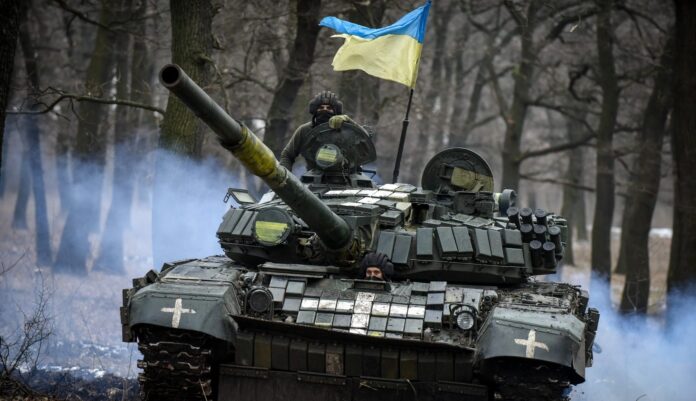
However, the fact that the Ukraine war has brought scenes of World War I-style trench warfare back to life does not at all mean that this war is an old-fashioned one. It is also a conflict dominated by drones and electronic warfare. The needs of the war, and the experience it provides, is leading to further modernization in these key military fields. The war is a new school in mass killing for capitalist governments and armies internationally, both those involved and those observing. It is a new field of capitalist innovation—in death.
Drones have been used in warfare for decades, but never on this scale. And their use is still increasing, and becoming more deadly. So far in 2025, Russia has reportedly fired nine times more attack drones across the Ukrainian border compared to the same period in 2024. And in August 2025, Russia claimed to have shot down an average of over 120 Ukrainian long range drones per day over its territory.
Drones are having a transformative effect on all theatres of the war, including on land, sea, and air. As well as the ubiquitous use of long range attack drones, which are much quicker to produce, cheaper and at times more effective than missiles, drones are an integral part of the trench war. They allow for quicker, less risky, and longer-range reconnaissance, targeting, and killing. Troops positioned several kilometers away from enemy soldiers remain at risk of death from above.
Drones range from extremely cheap (sometimes made from foam or even paper) models to high-tech, self-navigated systems, and can be armed with anything from a land mine or grenade to a large warhead. Next-generation sea drones, which can sink ships and blow up bridges, have also largely made the hottest zones of the Black Sea un-navigable.
Another extremely significant consequence of the rise of drone warfare is what military analysts refer to (grotesquely) as the “democratization of air power.” Drones diminish the relative importance of the expensive modern air forces, which are the preserve of the main military powers. For example, Russia’s airforce, which by some metrics is the world’s second largest, has played a relatively minor role in the war.
Ukraine’s successful use of drones to execute strikes on Russian territory is being watched and learned from by states and non-state actors alike around the world. Attacks such as “Operation Spider’s Web,” which saw basic drones smuggled into Russia and remotely unleashed against five air bases simultaneously, destroying multiple advanced aircraft, offer inspiration to a myriad of onlookers. Such attacks, which could be mimicked by armies, paramilitaries, or even organized crime, will transform the face of future conflicts.
Unsurprisingly, all of this is leading to an unprecedented drone production boom within the wider arms race. Ukraine is positioning itself as the new “drone superpower” of the West. Russia produces tens of thousands of attack drones per month, and is rapidly multiplying production. France is planning to triple its drone production, and the UK is building a massive new drone factory as part of a similar drive.
The technological innovations in death being driven forward by this war are extremely dangerous for humanity and its future. As the drones arms race escalates amid the rise of AI, it is only a matter of time before fully-automated killing machines (which operate without any human involvement) are being used. Until capitalism is replaced by a system that puts human talent and labor to use to build and nourish life, society, and the environment, the war industry will only become more deadly and destructive.
Another Reactionary War – For a Socialist Antiwar Movement
What is at stake in the Ukraine war and its imperialist logic is not understood as clearly by working-class people internationally, especially in Western countries, as the genocidal war in Gaza. Primarily, this is because, following Putin’s invasion, Western ruling classes succeeded in gaining a wide echo for their narrative regarding the war—one in which they were, of course, the “good guys.” In stating “Ukraine is fighting for us,” they also underlined the proxy character of the war—Ukrainian troops are indeed fighting for Western imperialist interests.
As well as taking their opportunity to try to deal a blow to a key imperialist adversary, they also seized upon the war as a “shock and awe” moment domestically. Putin’s barbarism and the alleged threat to Europe it represented was a new and powerful reason to reinforce patriotism, militarism, and the disciplining of the working class and youth. For the warmongers, it was a dream come true.
Every war is accompanied by a propaganda war. On the Russian side, Putin’s narrative—whereby he is leading a righteous challenge to U.S. global domination and the expansion of NATO—has been employed to increase Russian prestige in the so-called “global South.” This was a factor in a wave of regime changes in the “coup belt” of countries in West Africa, Central Africa and the Sahel where new ruling military juntas turned from subservience to French imperialism toward a new dependence on Russian and Chinese imperialism.
The same imperialist propaganda war has also taken its toll on the left and labor movement. Sympathy with Russia has reinforced the “campism” (taking sides in an imperialist conflict) of sections of the left and labor movement throughout the world, with the war seen as part of a global struggle for “multipolarity” against U.S. domination. On the other hand, a plethora of left organizations in the West have abandoned opposition to NATO under the war’s pressure.
Socialists argue clearly against all imperialist propaganda. The war in Ukraine is not somehow just or progressive, in contrast to the genocide in Gaza. Both are reactionary wars, and both must be opposed. Crucially, this opposition must be based on working-class methods of struggle and a socialist alternative.
Such an approach to the war in Ukraine starts with a call for working-class people in Russia, Ukraine, and in all the imperialist powers to join together in the struggle against war, dictatorship, and capitalism.
In Ukraine, this war grew out of the weakness of the workers’ movement and the lack of working-class political independence in the aftermath of the collapse of Stalinism. This allowed for a scenario that was dominated by a power struggle between rival factions of the oligarchical capitalist class, which also had geopolitical expression in a division over the country’s orientation to Russia or the West.
The weakness of the working-class movement led the mass anti-government “Maidan” protests of 2014 to be quickly co-opted by a pro-Western imperialist wing of the capitalist class and set the stage for this war.
Of course, today in Ukraine, socialists must stand with ordinary people in opposition to the Russian invasion. But no less so in opposition to the authoritarian capitalist Zelensky regime and against Trump’s predatory plans of imperialist plunder. Socialists in Ukraine should not support feeding the meatgrinder, but rather build independent working-class organizations to resist mandatory military service.
Protests and strikes should be built in defiance of martial law and demand the expropriation of the oligarchs for welfare and reconstruction. Independent working-class organizations should rally together, not under the banner of surrender to Russian imperialism or of capitulation to “national unity,” but in the struggle for a future of peace and socialism. This would include a powerful appeal to working-class people and organizations in Russia to refuse to serve the meatgrinder and rather conduct their own struggle against the Putin dictatorship.
Such a movement could silence the guns and open up a horizon of a peaceful shared future. All national and ethnic minorities in the region would be given full democratic and national rights, up to and including the right of secession. Democratic public ownership of resources and the major corporations would allow for a dramatic rise in living standards and the retooling of the war industry to socially useful green production.
Though this path may seem distant on the horizon, it remains the only one that is viable.